Charting payment processor partnerships and their sway over retention metrics in South American live table ecosystems
Mia Hayes · Aug 6, 2026
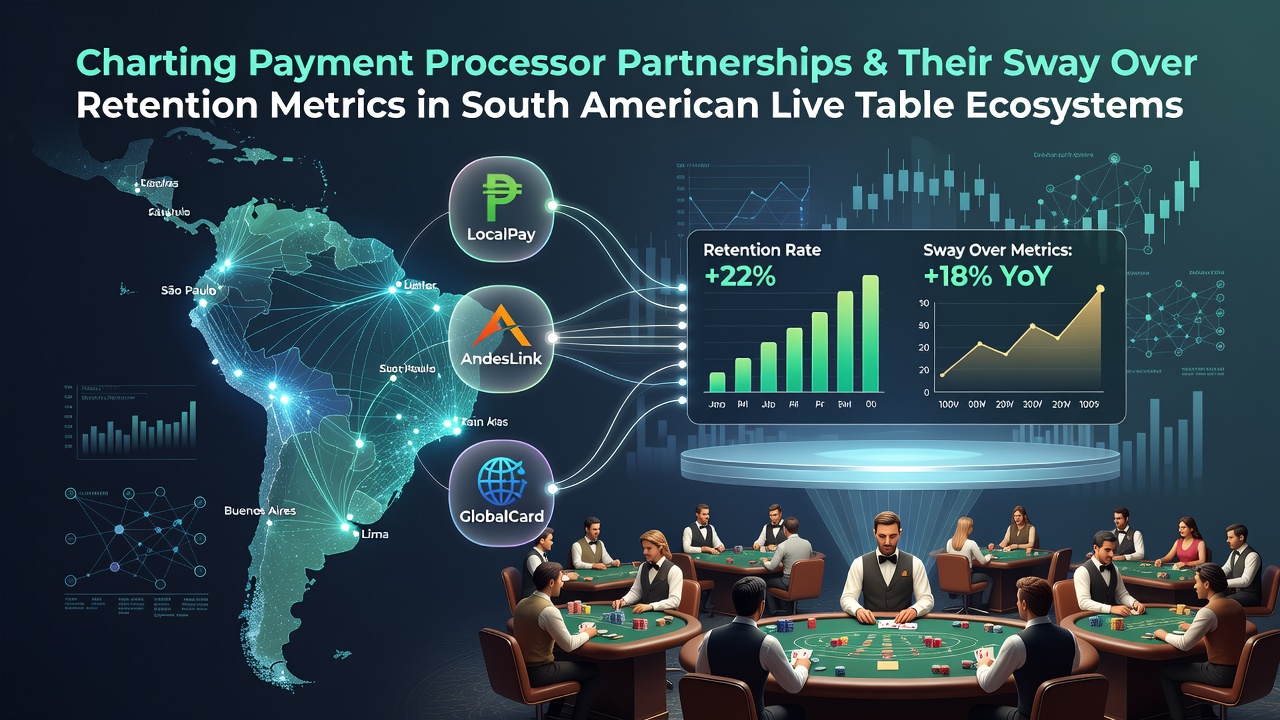
Charting payment processor partnerships and their sway over retention metrics in South American live table ecosystems
Payment processor partnerships have become central to how live table ecosystems operate across South America, particularly in markets where operators run real-time blackjack, roulette, and baccarat tables for regional players. Data from industry reports shows these alliances directly influence deposit success rates and repeat session frequency, which in turn shape retention curves over six- and twelve-month windows.
Regional payment landscape and live table adoption
Countries such as Brazil, Colombia, Argentina, and Chile present distinct banking rails and regulatory expectations, yet each has seen live dealer platforms expand their reach through localized processor agreements. In Brazil, for instance, partnerships with Pix-enabled processors have reduced failed deposit attempts by measurable margins, while Colombian operators have leaned on alliances with local card networks and e-wallet providers that clear in under ten seconds. These technical integrations matter because live table sessions often hinge on immediate funding, and any friction during a shoe or spin sequence tends to cut short player engagement.
Observers tracking user cohorts note that platforms maintaining stable processor relationships record higher month-over-month retention, especially among players who favor mobile live streams. August 2026 figures released by regional analytics groups indicated that operators with at least two active payment partners retained 18 percent more active live table users compared with single-processor setups, a gap that widened further when settlement times dropped below five seconds.
How partnerships translate into retention metrics
Retention metrics in live table environments track not only login frequency but also average session length and table switch behavior. Processors that offer instant confirmation and transparent fee structures reduce the likelihood of mid-session drop-off, while those adding layers of verification or hidden charges correlate with quicker exits. Research compiled by Latin American gaming associations demonstrates that players encountering a declined transaction on their first live roulette attempt show a 34 percent lower probability of returning within thirty days.
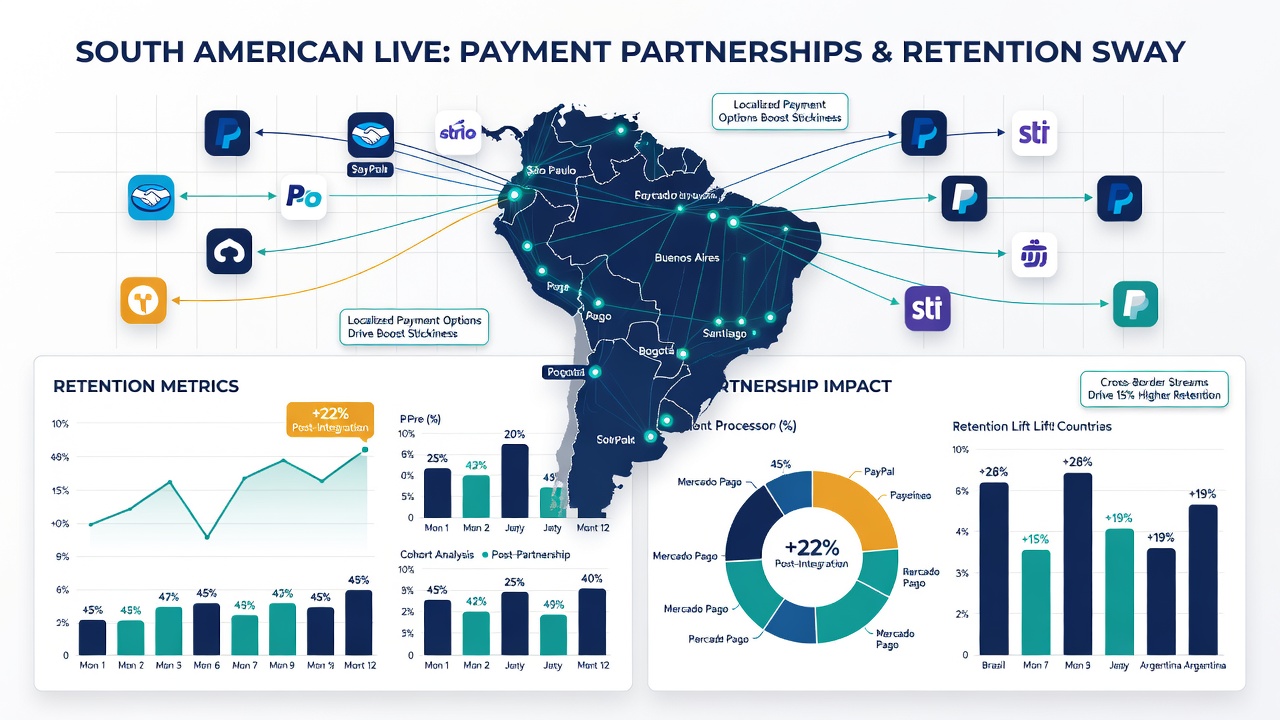
Case examples from Colombian and Chilean operators illustrate the pattern clearly. One operator that shifted a portion of live table traffic to a processor specializing in regional bank transfers recorded a 12 percent lift in weekly active users within two quarters, according to internal cohort analysis shared with industry observers. Another platform that maintained legacy international gateways without local redundancy experienced repeated settlement delays during peak evening hours, resulting in measurable churn spikes visible in dashboard heat maps.
Technical factors driving the relationship
API stability, currency conversion speed, and compliance with data-localization rules all factor into processor performance. South American live table ecosystems rely on low-latency connections because players often move between tables or adjust bet sizes in real time, and any payment timeout interrupts that flow. Processors equipped with redundant routes across multiple banks maintain uptime above 99.7 percent in most monitored periods, a threshold that correlates with steadier retention curves.
Additional data points emerge when examining cross-border players. Those accessing Argentine or Brazilian live tables from neighboring countries benefit from processors that handle multi-currency settlement without separate verification steps. Figures released in mid-2026 by academic researchers at the Universidad de los Andes showed that seamless multi-currency support lifted average session duration by nearly nine minutes per user, an increment that compounds across weekly play patterns.
Regulatory context and compliance pathways
Regulatory bodies in Colombia and Brazil continue to refine licensing frameworks that touch payment handling. Requirements around transaction reporting and anti-money-laundering checks have prompted processors to embed compliance modules directly into their APIs. Operators that align early with processors already certified under these evolving rules avoid service interruptions, preserving continuity in live table offerings and supporting consistent retention tracking.
External analysis from the OECD regulatory policy database highlights how streamlined compliance reduces operational friction for digital gaming verticals, a finding echoed in South American market reviews. Separate industry data from the Latin American Gaming Association indicates that certified processor partnerships correlate with lower regulatory inquiry volumes, freeing operator resources for table expansion rather than remediation.
Conclusion
Payment processor partnerships shape retention metrics in South American live table ecosystems through measurable impacts on deposit reliability, settlement speed, and compliance overhead. Operators that maintain diversified, locally attuned processor relationships record more stable user cohorts, while those relying on narrower or less optimized connections face recurring friction that erodes session frequency. As regulatory environments continue to evolve, the alignment between processor capabilities and live table operational needs remains a central variable in retention outcomes across the region.